Fill out our form, and we'll connect with you within 1 to 2 business days.
Phone: (925) 989-7737

But what happens when your website stops doing its job?
Many businesses hold onto outdated websites far longer than they should. They assume a redesign is expensive, unnecessary, or something to think about “later.”
Unfortunately, “later” often means lost leads, declining rankings, and frustrated users.
The truth is simple: your website has a shelf life.
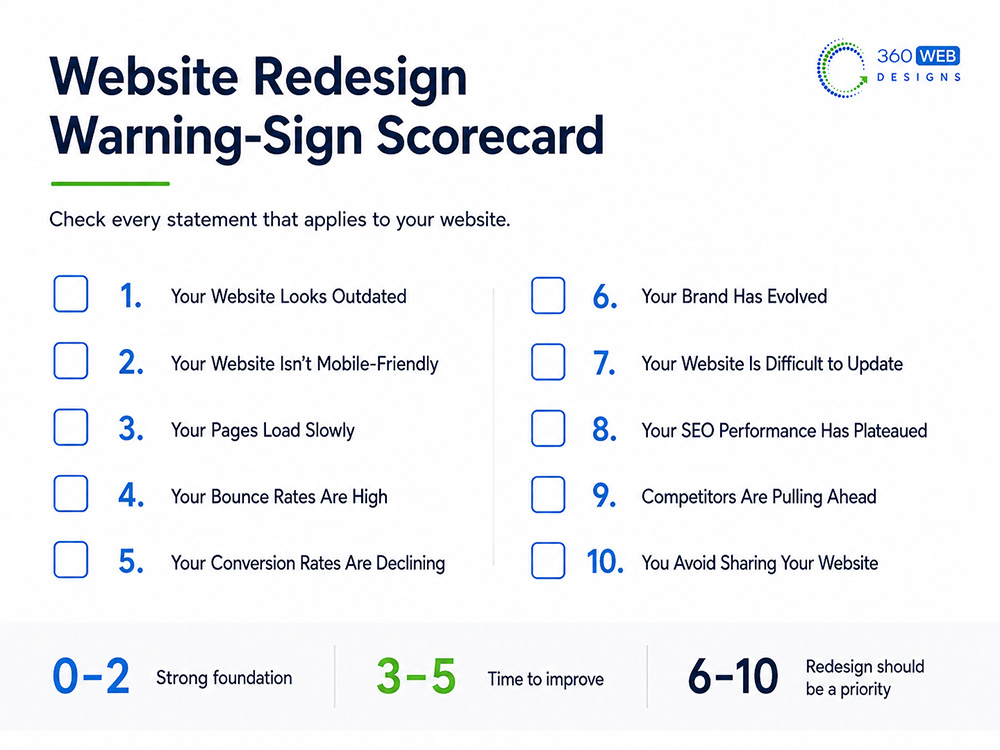
What worked five years ago may be hurting your business today, and if you’re unsure whether your current site still supports your business plans, these website redesign signs can help you determine whether it’s time to invest in a strategic website update.
A website redesign isn’t just about making things look prettier.
A successful redesign improves functionality, enhances the user experience, supports SEO efforts, and increases conversions.
For businesses in the middle of the buying journey, a redesign can bridge the gap between interest and action. It helps potential customers feel confident enough to choose you over competitors.
That’s why recognizing these website red flags early is crucial.
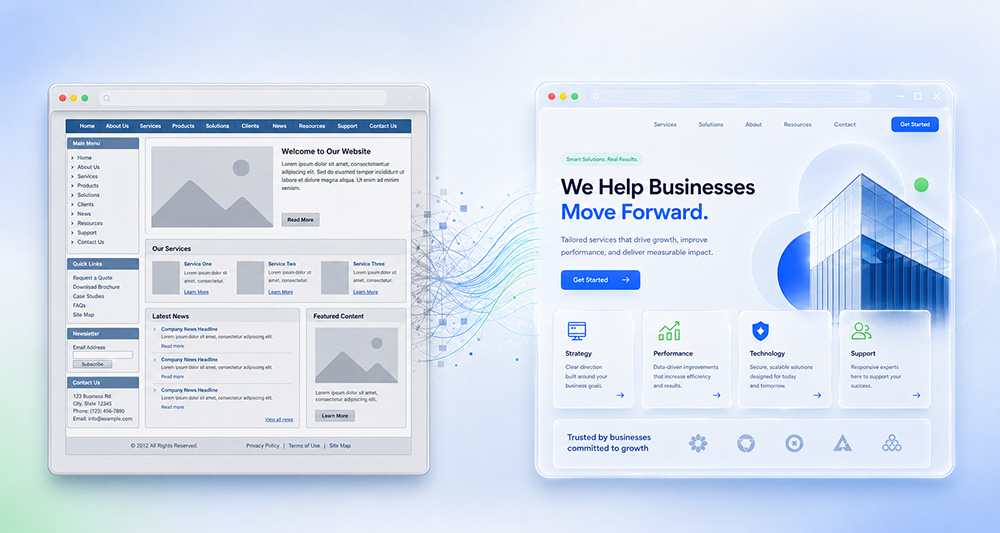
Studies consistently show that visitors form opinions about a website within seconds. If your site looks like it belongs in another decade, users may question your credibility and simply move on to your competitor’s website.
An outdated design often includes:
Consumers associate modern design with trustworthiness. Even if your products and services are exceptional, an outdated appearance can create doubt.
Ask yourself:
Would you proudly show your website to a prospective customer today?
If the answer is no, it may be time for a redesign.
Mobile traffic dominates the internet.
People research products, compare companies, and submit inquiries directly from their smartphones.
If visitors have to pinch, zoom, or struggle to navigate your site on mobile devices, they’ll likely leave.
Common mobile issues include:
A responsive website is essential in 2026.
A redesign focused on mobile usability ensures your site delivers a seamless experience across every device.
Speed affects everything.
Slow websites frustrate users and negatively impact conversions.
Even a few extra seconds of load time can increase bounce rates significantly.
Some causes of poor performance include:
Visitors expect instant access to information.
If your website feels sluggish, prospects may assume your business operates the same way.
A website redesign often includes performance optimization that improves both user experience and search visibility.
High bounce rates can signal a disconnect between visitor expectations and what your website delivers.
People may leave quickly because they cannot find what they need.
Possible reasons include:
Analytics provide valuable insights.
If users consistently exit after viewing only one page, it’s worth investigating whether your website experience is driving them away.
One of the most overlooked signs of a website redesign is not how your website looks to you—but how visitors actually behave.
Traffic means very little if it doesn’t generate results.
If inquiries, consultations, bookings, or purchases have dropped despite stable traffic, your website may be the problem.
A redesign can improve conversions by focusing on:
The goal isn’t just attracting visitors.
It’s turning them into customers.
Businesses that prioritize conversion-focused redesigns often see measurable improvements in lead generation and revenue.
Businesses change.
Maybe you’ve expanded your services.
Perhaps you’ve refined your messaging, updated your logo, or identified a new target audience.
If your website no longer reflects who you are, visitors receive mixed signals.
Brand inconsistency creates confusion.
Your website should communicate:
A redesign allows your digital presence to align with your business today—not who you were years ago.

How easy is it to make changes?
If adding a blog post requires calling a developer, your website may be limiting your growth.
Older platforms often create bottlenecks.
You might struggle to:
Modern websites are designed for flexibility.
A redesign can provide a content management system that empowers your team to move quickly and respond to changing business needs.
Search engine optimization evolves constantly.
What worked years ago may no longer be effective.
If your rankings have stagnated or declined, outdated website architecture may be part of the issue.
SEO-related website redesign signs include:
A strategic redesign provides an opportunity to strengthen your SEO foundation.
This includes improving crawlability, enhancing user experience signals, and creating content pathways that support both users and search engines.
Your customers compare options.
They don’t evaluate your website in isolation.
They compare it against competitors.
Visit a few competing websites and ask yourself:
If the answer is yes, prospects may choose them before ever contacting you.
A redesign helps level the playing field and positions your business as the obvious choice.
Remember:
The standard isn’t whether your website looks “good enough.”
It’s whether it performs better than the alternatives.
This may be the clearest sign of all.
If you hesitate to include your website in presentations, social posts, advertisements, or networking conversations, something isn’t right.
Business owners often know deep down when their site no longer represents them well.
You might say things like:
Your website should be an asset you proudly promote. Not something you apologize for.
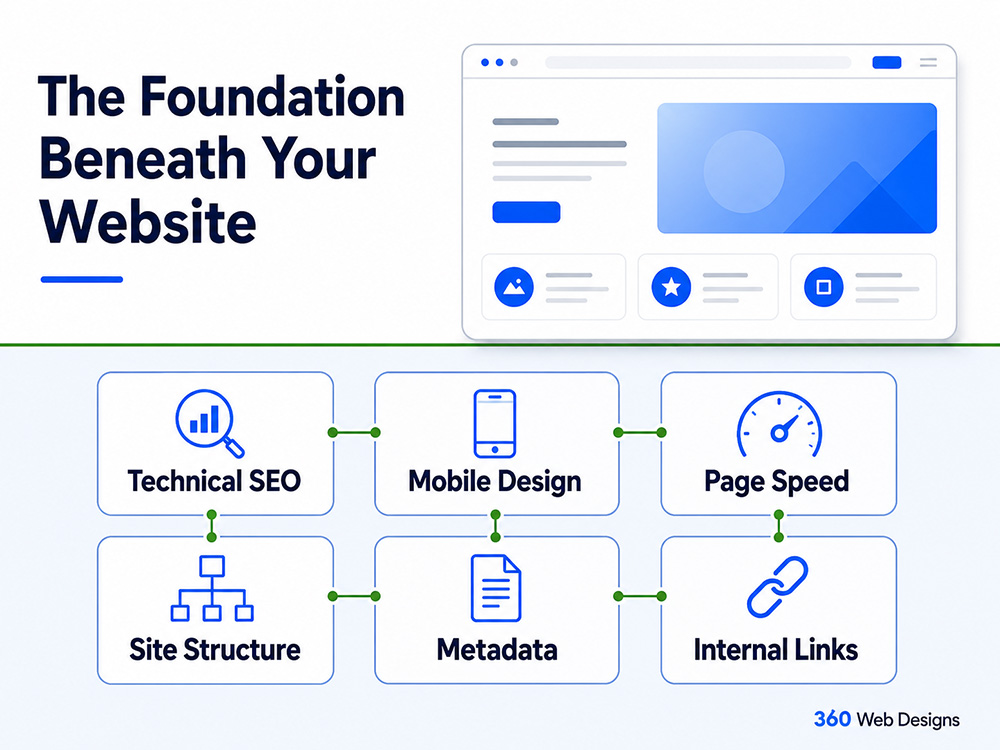
A redesign should go beyond aesthetics.
The best projects combine design, functionality, and marketing strategy.
Many businesses delay redesign projects because they view them as expenses.
But the greater cost often comes from inaction. An underperforming website can lead to:
Every day your website fails to convert visitors is another day potential customers choose someone else.
Instead of asking, “Can we afford to redesign our website?”
Ask: Can we afford not to?
If several of these website redesign signs sound familiar, the answer may already be clear.
A thoughtful redesign is about creating a digital experience that actually supports your business.
The sooner you address your challenges, the sooner you can get your website off your plate.
If your current website is outdated, underperforming, or no longer reflects your brand, now is the time to take action.
Don’t lose another lead to a confusing user experience or a competitor with a stronger online presence.
Partner with 360 Web Designs. Schedule your website redesign consultation today